Contents
Build the specification
Define the use case and approval work
Record who uses the product, where they use it and which outcomes are required. Compare how much product transfers per use and whether the pack supports the approved instructions. Share that brief with purchasing, product development and the person approving the final label.
Keep the formula and package paired
Request a qualified review of application boundaries and foreseeable exposure. Label samples with a revision and lot reference and include the closure in the approval record. Compare available product directions such as Pet Nose Balm and Pet Paw Balm.
Compare the routes
| Route | How to scope the quote | Decision evidence |
|---|---|---|
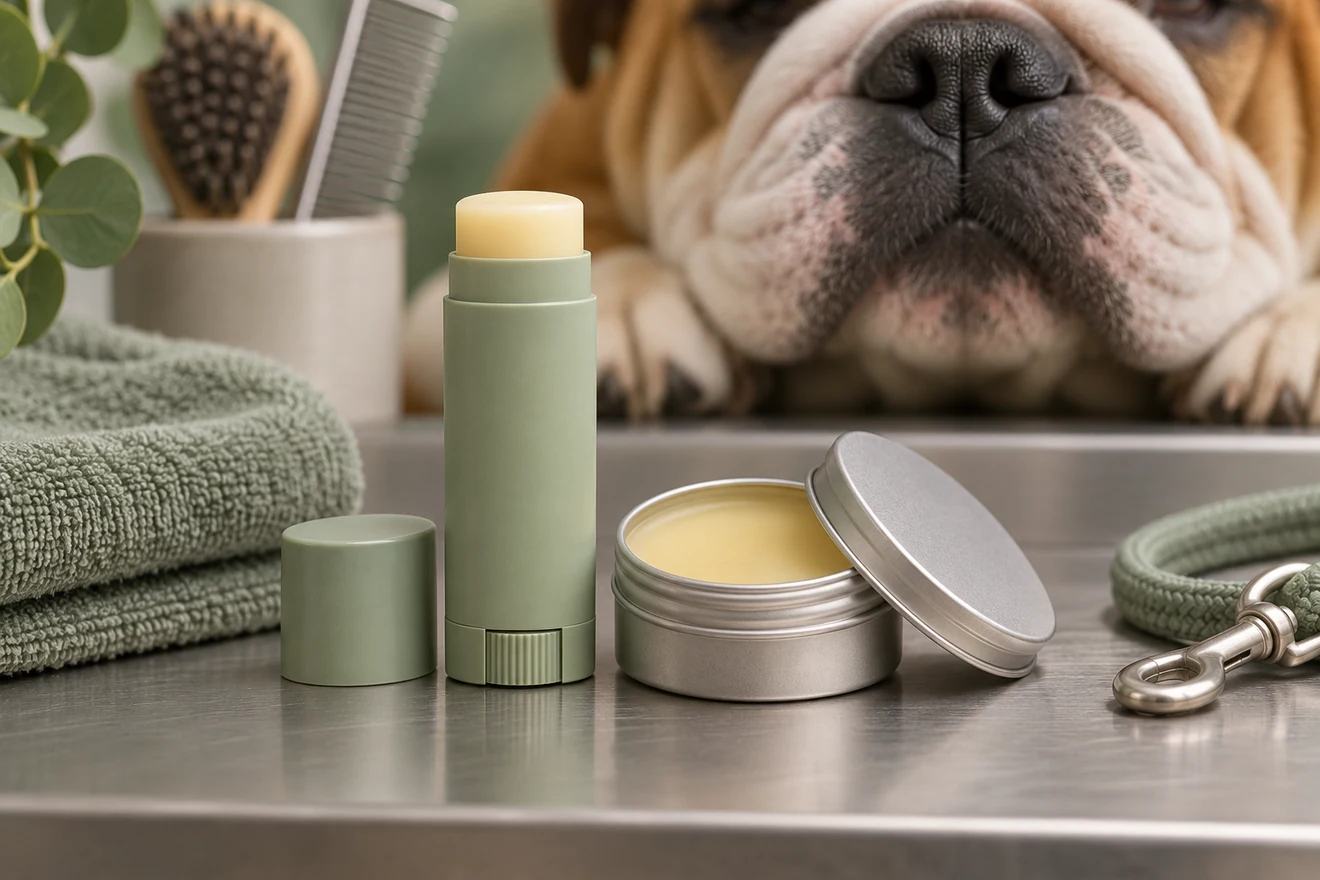
| Compact tin | Quote it against the intended channel, pack size, artwork and forecast. Ask which components can be sampled from current inventory. | Use this as the reference route. Record application control, texture and potential licking. |
| Precision squeeze tube | Price this at the same finished-unit quantity and destination terms. Flag any extra development, materials or packaging commitments. | Compare with the reference using a qualified review of application boundaries and foreseeable exposure. |
Practical sampling guide
- Define external application boundaries before selecting the closure.
- Collect a qualified review of application boundaries and foreseeable exposure. Log the sample date, dose and conditions so the team can repeat the comparison.
- Keep the sample selection conditional on the reviewed application boundary and intended use.
- Ask the supplier to itemize pilot and repeat-order costs. File the acceptance record with the approved sample and specification.
Buyer FAQ
Can I start from a stock formula?
Ask for a stock sample and state the acceptance criteria for application control, texture and potential licking. Scope a custom revision if the base fails on a requirement that matters to the buyer.
What should the quotation include?
Ask for separate formula, primary packaging, decoration and testing line items. Request finished-unit minimums for the compact tin and the precision squeeze tube and identify any separate material commitments.
What should I approve before production?
Approve the formula revision, final pack and verified artwork together. Pair the signed specification with a qualified review of application boundaries and foreseeable exposure and identify who can approve any later substitution.
What is the practical difference between compact tin and precision squeeze tube?
Judge both against the same use case and score application control, texture and potential licking. A wide tin and precision tube create different opportunities for overdosing and contact transfer.
What evidence should I request with the samples?
Request a qualified review of application boundaries and foreseeable exposure. Ask which formula revision, packaging revision, lot and test conditions the evidence covers.
How should the first comparison be run?
Define external application boundaries before selecting the closure.
What should I clarify before ordering packaging?
Compare how much product transfers per use and whether the pack supports the approved instructions.
What should I do if the first prototype misses the target?
Keep the sample selection conditional on the reviewed application boundary and intended use.
Conclusion
For a pet nose balm project, commit the order after you have compared compact tin and precision squeeze tube against the same criteria. Make application control, texture and potential licking part of your sign-off. Explore the Pet Care catalog for related OEM/ODM formats.
Discuss your OEM/ODM brief
WhatsApp +86 15346717907 · adon@oempetcaresupplier.com · oempetcaresupplier.com