Contents
Build the specification
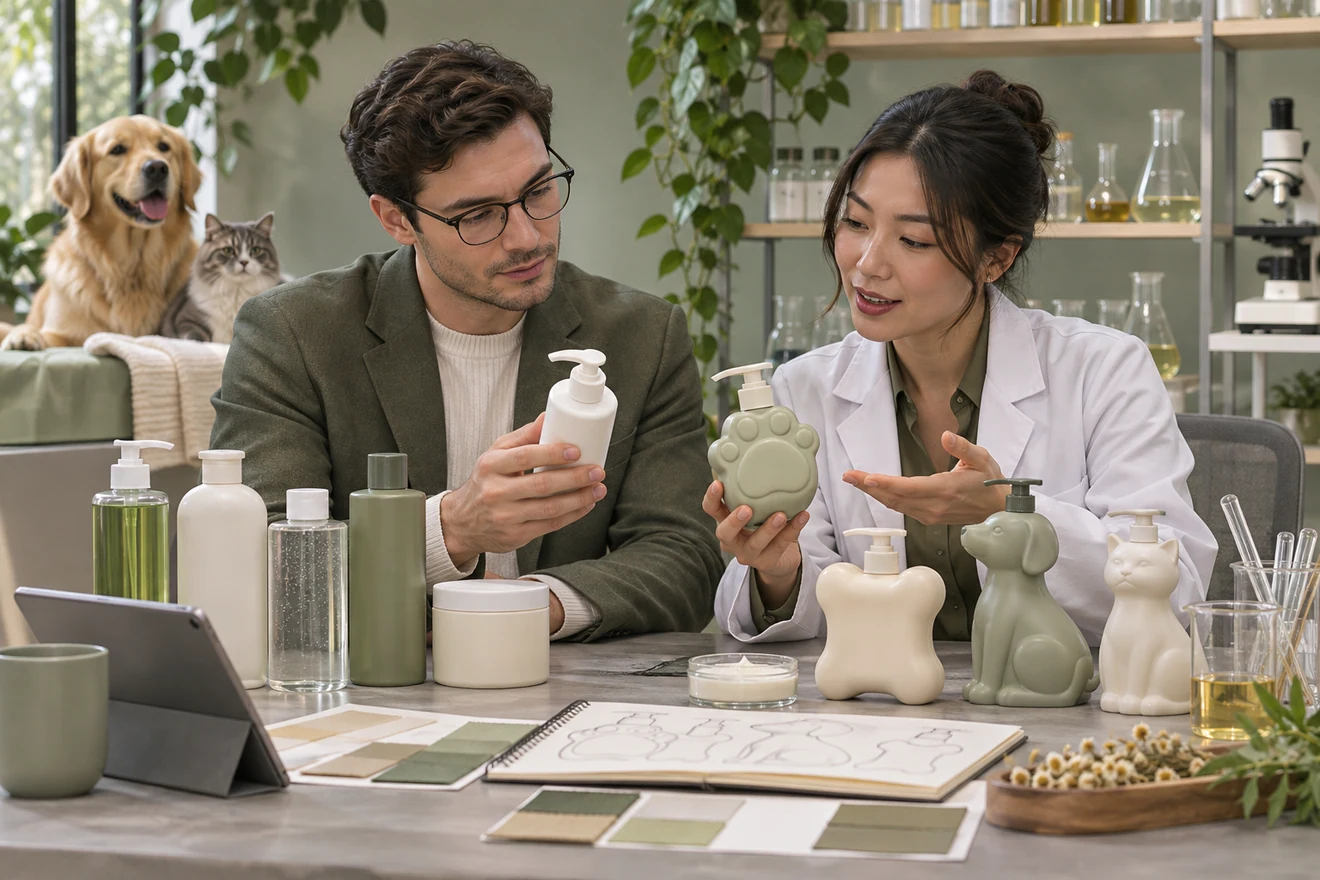
Define the use case and approval work
Record who uses the product, where they use it and which outcomes are required. Record lighting and drying settings so production checks use the same conditions. Share that brief with purchasing, product development and the person approving the final label.
Keep the formula and package paired
Request before-and-after photos under controlled light. Label samples with a revision and lot reference and include the closure in the approval record. Compare available product directions such as White Coat Brightening Shampoo and Dark Coat Enhancing Shampoo.
Compare the routes
| Route | How to scope the quote | Decision evidence |
|---|---|---|
| Cleaning-led formula | Quote it against the intended channel, pack size, artwork and forecast. Ask which components can be sampled from current inventory. | Use this as the reference route. Record color cast, uneven deposition and rinse repeatability. |
| Formula with a tone-adjusting system | Price this at the same finished-unit quantity and destination terms. Flag any extra development, materials or packaging commitments. | Compare with the reference using before-and-after photos under controlled light. |
Practical sampling guide
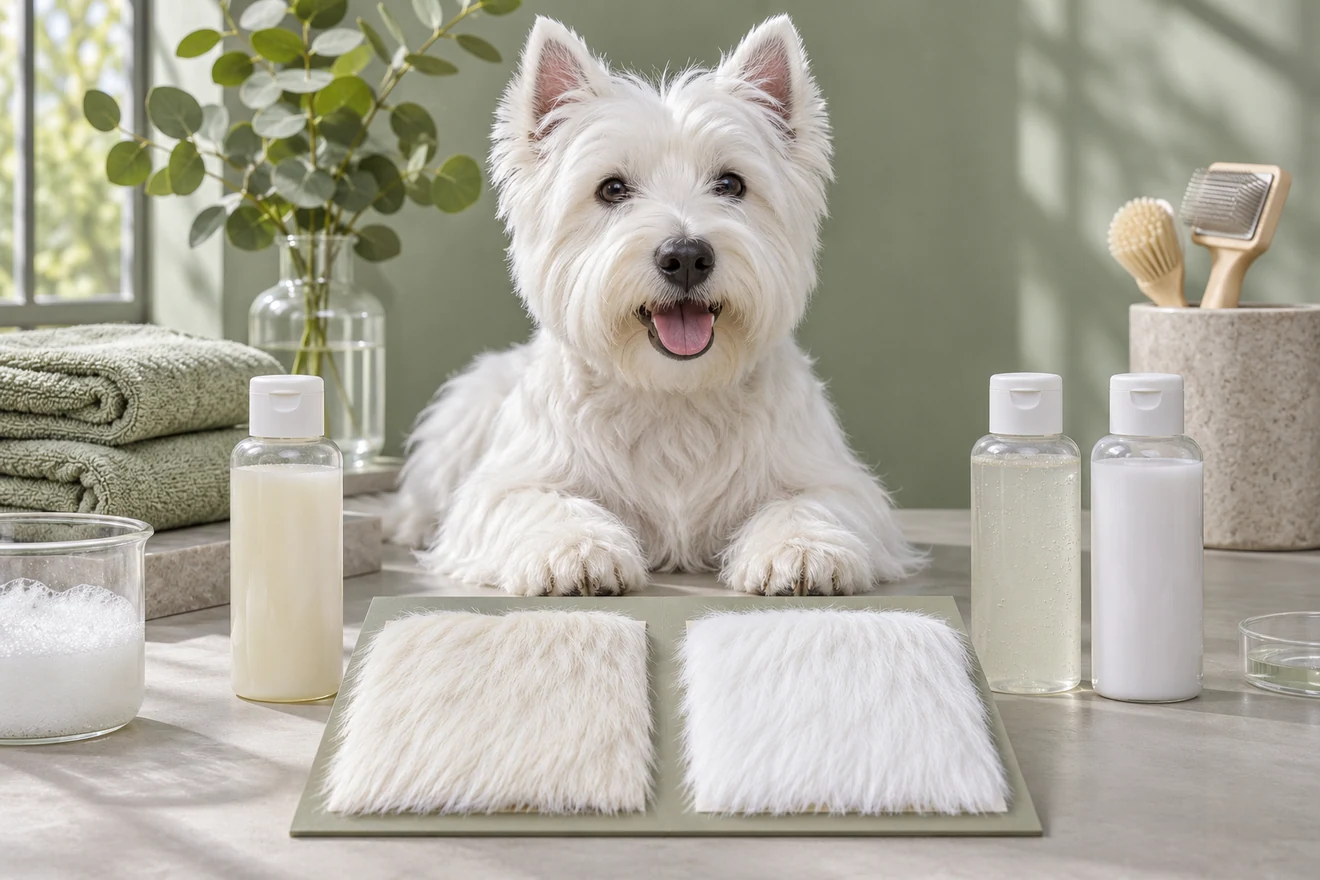
- Compare against a standard wash on white swatches from the same source.
- Collect before-and-after photos under controlled light. Log the sample date, dose and conditions so the team can repeat the comparison.
- If the finish looks uneven or deposits color at the ends, investigate uptake and application before choosing claims.
- Ask the supplier to itemize pilot and repeat-order costs. File the acceptance record with the approved sample and specification.
Buyer FAQ
Can I start from a stock formula?
Ask for a stock sample and state the acceptance criteria for color cast, uneven deposition and rinse repeatability. Scope a custom revision if the base fails on a requirement that matters to the buyer.
What should the quotation include?
Ask for separate formula, primary packaging, decoration and testing line items. Request finished-unit minimums for the cleaning-led formula and the formula with a tone-adjusting system and identify any separate material commitments.
What should I approve before production?
Approve the formula revision, final pack and verified artwork together. Pair the signed specification with before-and-after photos under controlled light and identify who can approve any later substitution.
What is the practical difference between cleaning-led formula and formula with a tone-adjusting system?
Judge both against the same use case and score color cast, uneven deposition and rinse repeatability. Automatic camera exposure can make a brightening sample look better without any change to the coat.
What evidence should I request with the samples?
Request before-and-after photos under controlled light. Ask which formula revision, packaging revision, lot and test conditions the evidence covers.
How should the first comparison be run?
Compare against a standard wash on white swatches from the same source.
What should I clarify before ordering packaging?
Record lighting and drying settings so production checks use the same conditions.
What should I do if the first prototype misses the target?
If the finish looks uneven or deposits color at the ends, investigate uptake and application before choosing claims.
Conclusion
For a white coat brightening shampoo project, commit the order after you have compared cleaning-led formula and formula with a tone-adjusting system against the same criteria. Make color cast, uneven deposition and rinse repeatability part of your sign-off. Explore the Pet Wash catalog for related OEM/ODM formats.
Discuss your OEM/ODM brief
WhatsApp +86 15346717907 · adon@oempetcaresupplier.com · oempetcaresupplier.com