A distributor selling to grooming salons can lose a bid on cost per bath even with the lowest price per bottle. A retail brand can face the opposite problem: a concentrated shampoo looks economical on paper, but buyers dispense too much through the flip-top cap. Both decisions start with the same question. How much usable product does the customer get, in the pack you actually plan to sell?
This guide covers rinse-off dog shampoo for routine grooming. Use it to put competing quotes on the same basis, compare samples and agree on what the factory must deliver before you approve production.
Define the product both factories are quoting
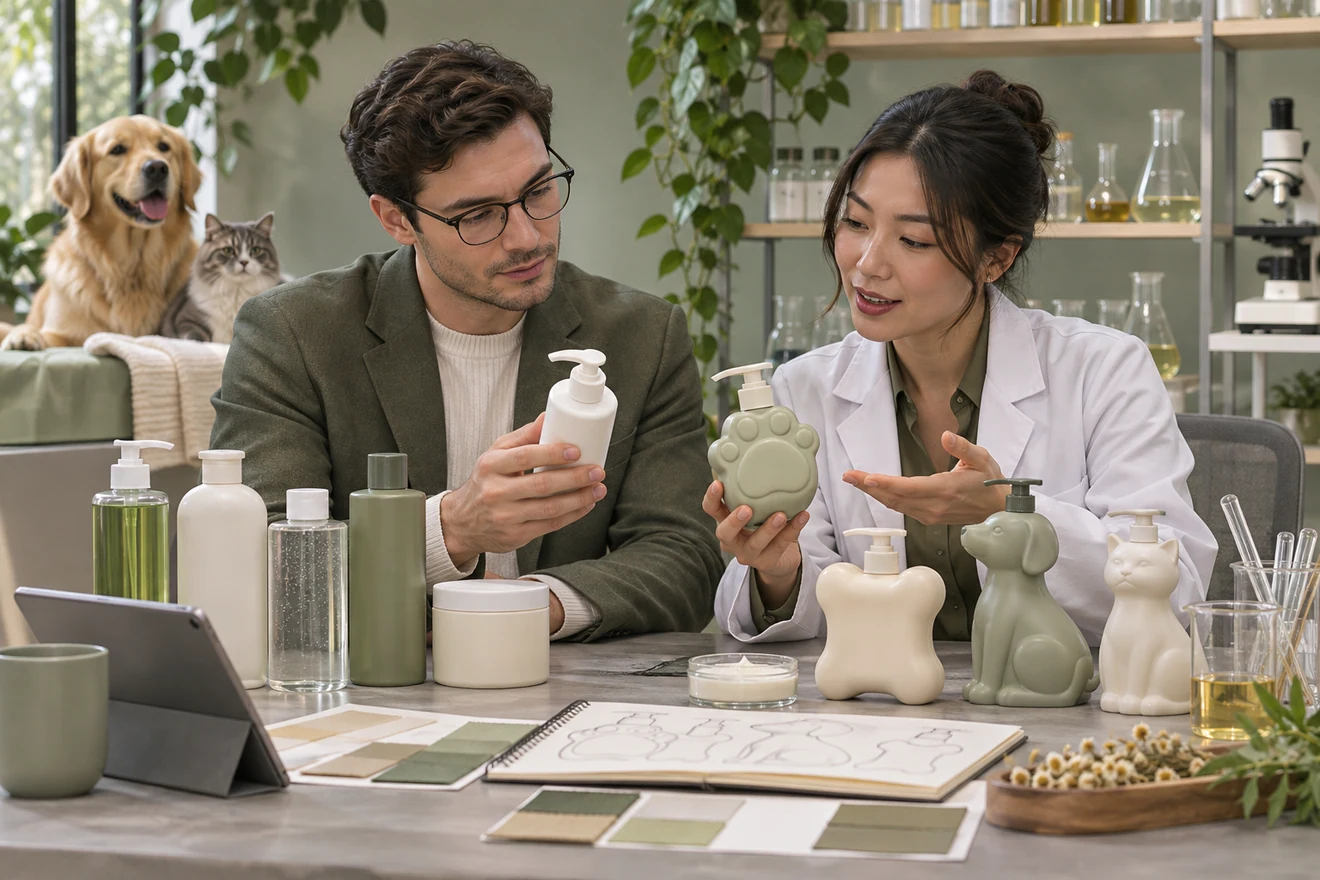
Give each supplier the same brief: target market, dog and coat type, retail or salon use, ready-to-use or concentrate format, fill volume, pack, opening quantity and delivery destination. Request separate prices for the first order and a repeat order. Artwork setup or sample development may only apply once.
Stock formula or custom dog shampoo?
For a stock formula, ask which exact version was tested and how changing the fragrance would affect the evidence available. For custom development, identify who owns the formula, whether exclusivity covers a territory or channel, and what happens if an ingredient becomes unavailable. Suppliers use OEM and ODM differently. Put these deliverables in the quote. Review the OEM and ODM service options.
Calculate cost per wash
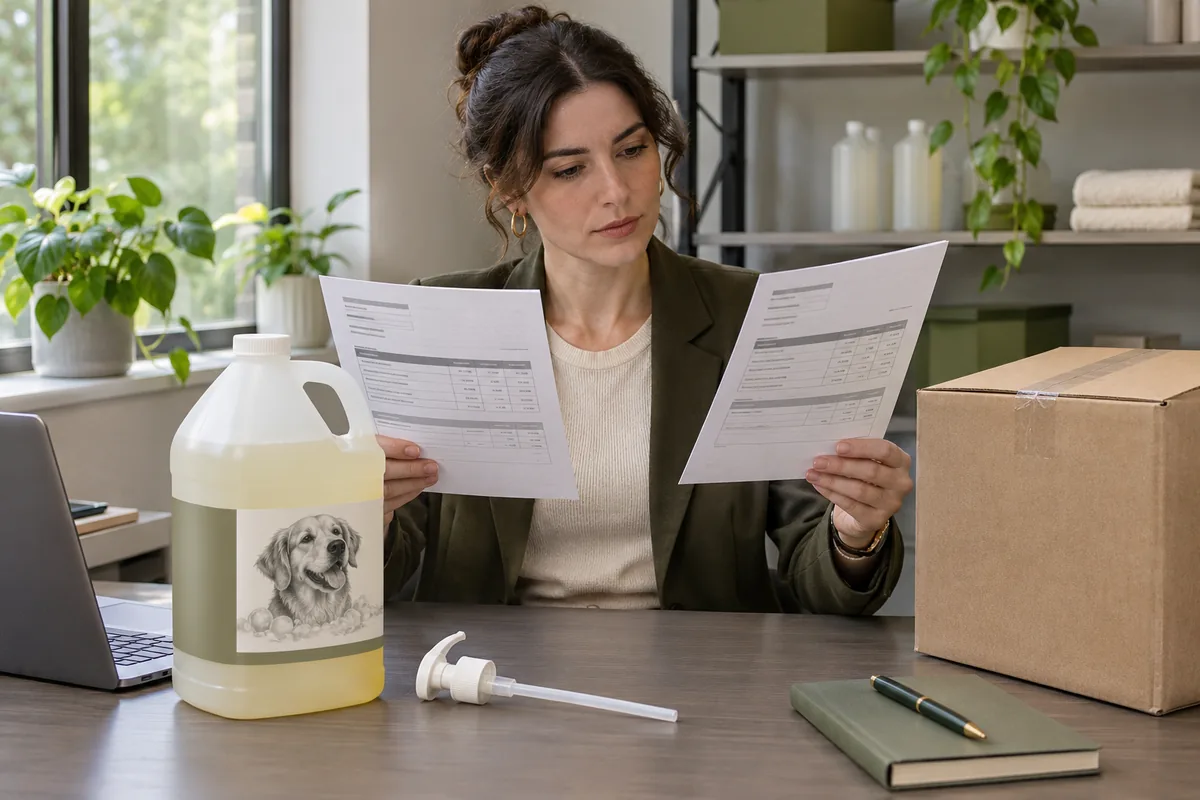
For a salon range, use the same coat type, dog size and application method for both samples. Divide the delivered cost per bottle by the number of washes it yields. Measure the dose of undiluted product used per wash. If the supplier specifies one part concentrate plus four parts water, 50 mL of prepared solution contains 10 mL of concentrate.
| Buying criterion | A · Ready to use | B · Concentrate |
|---|---|---|
| Delivered cost per bottle | $3.00 | $4.00 |
| Undiluted product per wash in trial | 15 mL | 10 mL |
| Theoretical washes per bottle | 33.3 | 50 |
| Product cost per wash | $0.09 | $0.08 |
| What could change the decision? | Measure how much is left in the bottle when the pump stops drawing. | At 15 mL of concentrate per wash, cost rises to $0.12. Check the dispenser and mixing instructions. |
These figures illustrate the calculation, not supplier pricing or a recommended dose. They exclude mixing labor, water and waste. At a one-cent difference per wash, a salon trial can tell you whether the saving survives normal working conditions. For retail, also compare delivered cost per sellable bottle against the net price your distributor will actually pay.
Compare the formula and the pack together
Cleansing, slip and rinse time
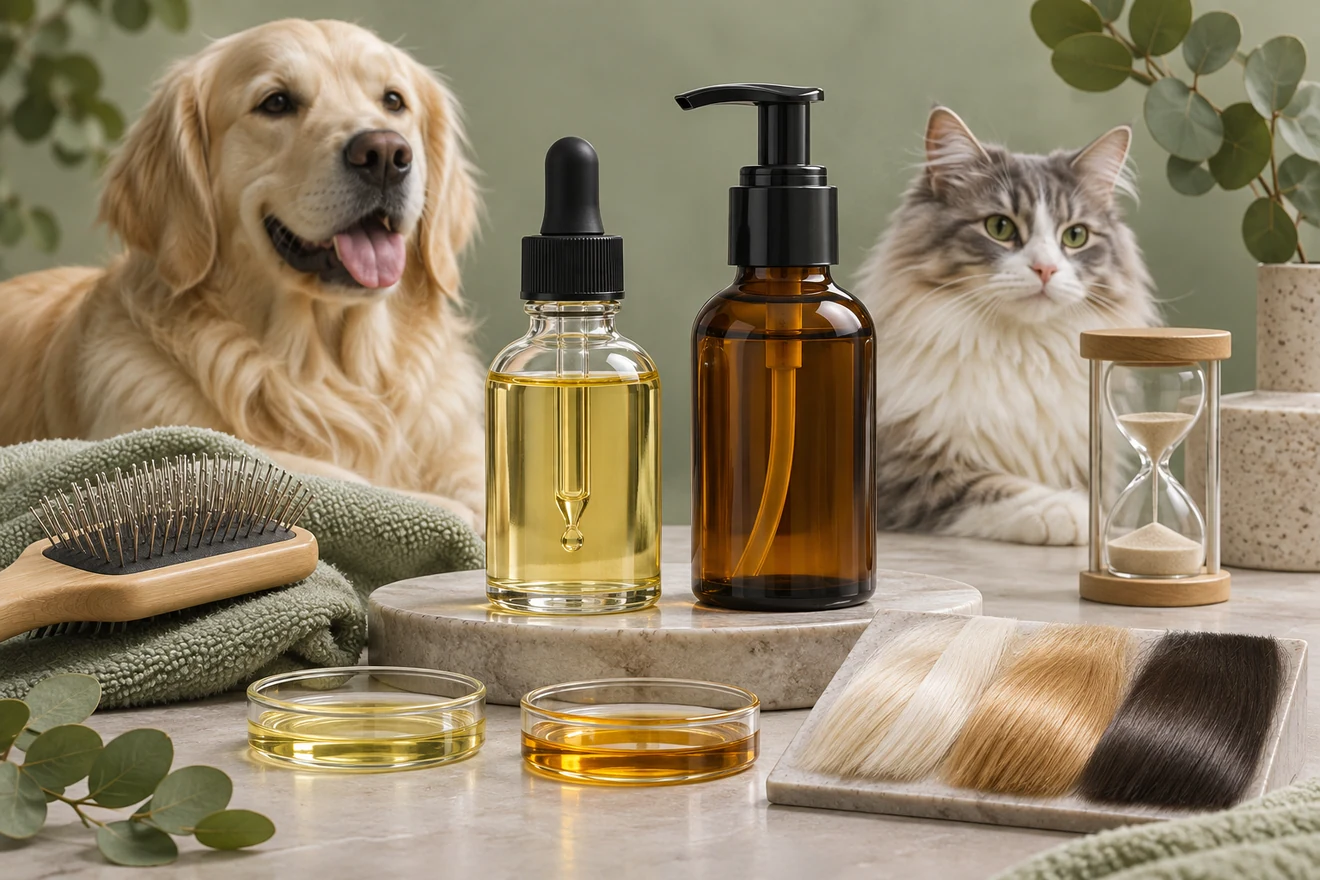
The surfactant blend affects how the shampoo wets the coat and lifts oily soil. Conditioning ingredients can change wet combing and the feel after drying. Foam volume alone cannot tell a buyer how much residue remains. For a repeatable screening trial, use matched coat swatches, the same soil load, water temperature, dose and rinse flow. Record rinse time, comb drag and dry feel separately. Agree which outcome matters most to your customer. Browse the pet wash and grooming product range.
Viscosity, closures and release evidence
Request a filled sample in the proposed bottle and closure. Weigh several pump strokes after priming and record the average mass delivered. To convert grams to milliliters, use the formula's measured density. Repeat after the agreed storage trial and check for leaks, blocked pumps and changes in dispensing effort. A thick formula in a jar tells you little about how easily it will dispense through a narrow pump.
Ask the manufacturer to specify how it measures pH and viscosity, including sample temperature and the viscosity test settings. For a water-based shampoo, request the microbiological release criteria and preservation evidence relevant to the proposed formulation. A batch certificate of analysis records results for that batch. Shelf-life support needs evidence covering storage over time and compatibility with the proposed packaging.
Check U.S. grooming claims before artwork approval
For a U.S. launch, routine coat cleansing and a claim to treat a fungal infection have different regulatory implications. FDA's March 2019 compliance policy guide addresses animal grooming aids intended solely for cleansing or beautifying. FDA separately explains that a shampoo intended for therapeutic use is regulated as an animal drug. Check the proposed label, product page and distributor copy together. This guidance concerns the U.S. market. FDA grooming-aid guidance · FDA explanation of medicated shampoos.
Send a quote request you can award against
- Issue one brief. Send the same pack specification, target claims, quantities and destination to each factory. Include a benchmark sample and describe the one aspect you want to improve.
- Separate every cost. Request formula, primary packaging, decoration, carton, testing, setup and freight as individual lines. Record the trade term and named place. Mark an omitted line as unquoted until the supplier confirms who pays.
- Check the minimum order quantity by component. Ask for the minimum per formula, fragrance and printed pack. If the closure order exceeds the first fill, settle ownership, storage charges and reorder terms for the balance.
- Approve a production reference. Keep an identified sample and a written specification covering appearance, fragrance, test limits, fill and closure. Agree how changes will be approved. Review the sampling process.
- Confirm the release and shipping dates separately. Ask when the clock starts, which approvals are outstanding and who reviews batch results. Give procurement a signed quote and approved specification bearing the same revision.
Frequently asked questions
What information does a private label manufacturer need for an initial quote?
Provide target market, intended use, order volume, fill size, packaging and delivery point. Flag undecided items so the supplier can identify its pricing assumptions.
Can I start with a stock formula and customize it later?
Ask for separate quotes for both stages. A fragrance or ingredient change may require new compatibility or stability work. Agree who funds it before the first order.
Who owns the artwork and formula?
Settle each asset separately in writing. Confirm access to editable artwork, ownership of printing tools, formula rights and whether another factory may use the specification.
How do I compare shampoo concentrates with different dilution ratios?
Ask each supplier to express dilution in parts of product plus parts of water. Measure the concentrate consumed per comparable wash, then multiply by delivered cost per milliliter.
Which packaging sample should a salon distributor test?
Request the proposed production bottle, dip tube and closure filled with the intended formula. Check dosing with wet hands and test dispensing as the bottle approaches empty.
Does matching pH mean two shampoos will perform alike?
No. Products can share a pH reading yet differ in surfactant concentration, conditioning, viscosity and rinsing. Use pH as one specification alongside a comparative wash trial.
How should I compare two fragrance samples?
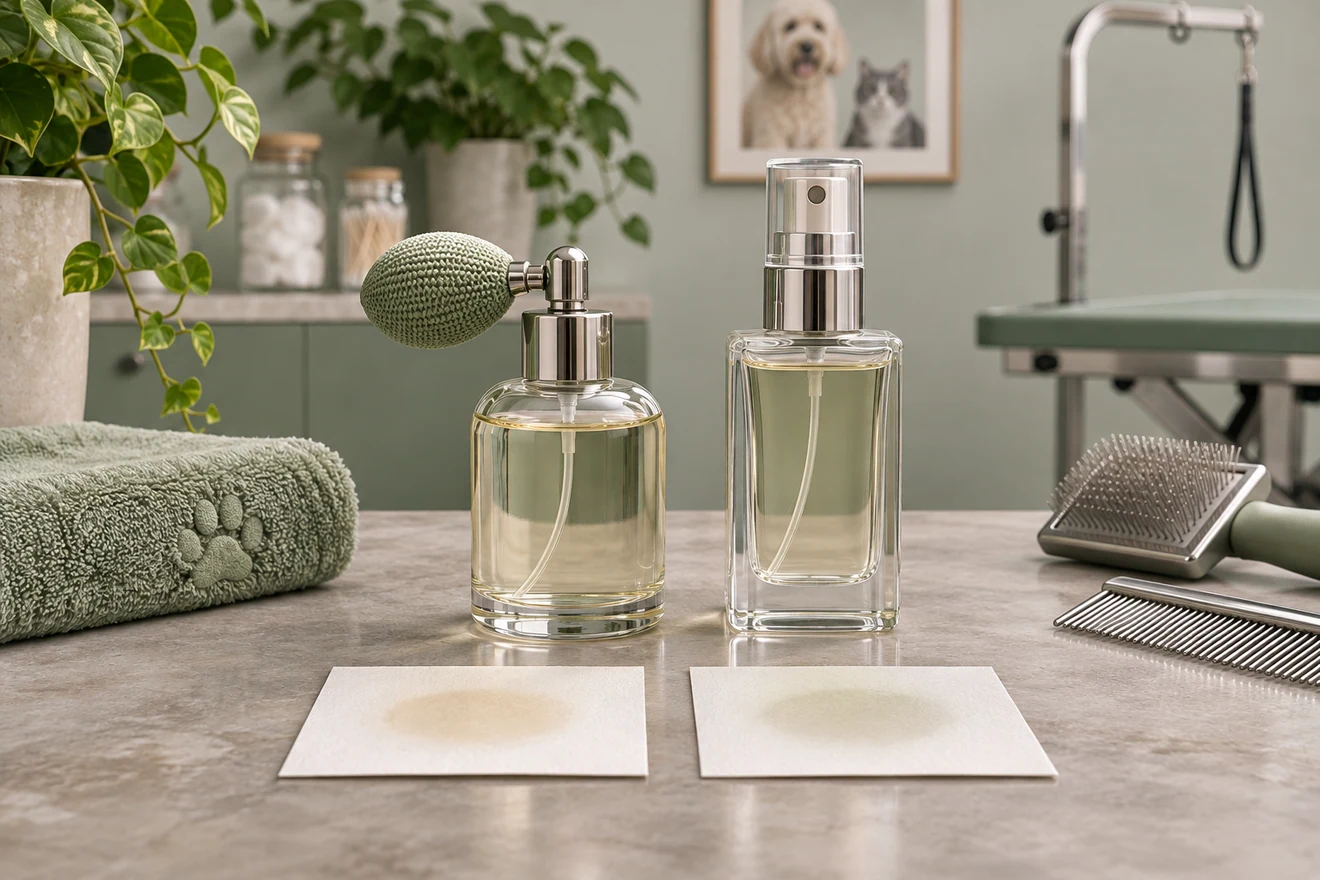
Assign blind codes, use equal doses and assess at defined points during washing and after drying. Record intensity as well as preference. Confirm the fragrance version on the approval sheet.
Can a dog shampoo sample support a dog-and-cat label?
A dog-only brief leaves the cat use case unassessed. Before adding cats to the label, request a species-specific review of the complete formula, exposure and use directions.
Conclusion
A defensible purchase order ties the price to a measured dose, an approved filled pack and a written release specification. If offers are close, repeat the test most likely to change your decision. In the salon example, an extra 5 mL of concentrate reverses the apparent saving. That is worth resolving before ordering printed bottles.
For a project-specific quote, send your intended market, fill size, packaging preference and first-order quantity.
WhatsApp +86 15346717907Email adon@oempetcaresupplier.com
Website oempetcaresupplier.com